





The 4Runner’s Call to the Wild
Few SUVs balance daily drivability with trail-eating capability as gracefully as Toyota’s 4Runner. Its body-on-frame construction, generous wheel travel, and bulletproof 4.0-liter V6 have earned a reputation for unfussy reliability everywhere from Baja sand to Appalachian mud. That mechanical confidence invites owners to push farther, yet factory cargo space often runs out long before ambition does. A purpose-built roof rack and ladder unlock the 4Runner’s real potential, moving gear topside so passengers stay comfortable and vital equipment remains instantly accessible.
Whether the itinerary calls for a quick kayak run before dawn or a two-week loop through Utah’s canyon country, external storage preserves interior order and safety. Heavy fuel cans, smelly recovery boards, and bulky rooftop tents belong outside the cabin, keeping the center of gravity low and windows clear. Add an integrated ladder, and every tie-down point becomes a one-step reach, eliminating risky wheel-standing acrobatics on uneven ground.
Beyond its rugged design, the 4Runner offers a suite of technology that enhances both on-road comfort and off-road capability. The available Multi-Terrain Select system allows drivers to tailor their vehicle’s performance based on the conditions ahead, whether it’s mud, sand, or rock. Coupled with the Kinetic Dynamic Suspension System, which adjusts the suspension to maintain traction and stability, the 4Runner transforms challenging landscapes into mere bumps in the road. Inside, the cabin is designed with adventure in mind, featuring durable materials that can withstand the rigors of outdoor life while still providing the comforts of home. With ample USB ports and an intuitive infotainment system, staying connected during those long excursions is a breeze.
Moreover, the 4Runner’s legacy is steeped in a culture of exploration and adventure. Owners often share tales of epic road trips and spontaneous weekend getaways, creating a community bound by a shared passion for the great outdoors. The vehicle’s iconic design and formidable presence on the road inspire confidence, making it a popular choice among outdoor enthusiasts and families alike. From weekend warriors to seasoned adventurers, the 4Runner serves as a reliable companion, ready to tackle whatever the journey may bring, whether it’s navigating rocky trails or cruising down the highway to the next adventure.
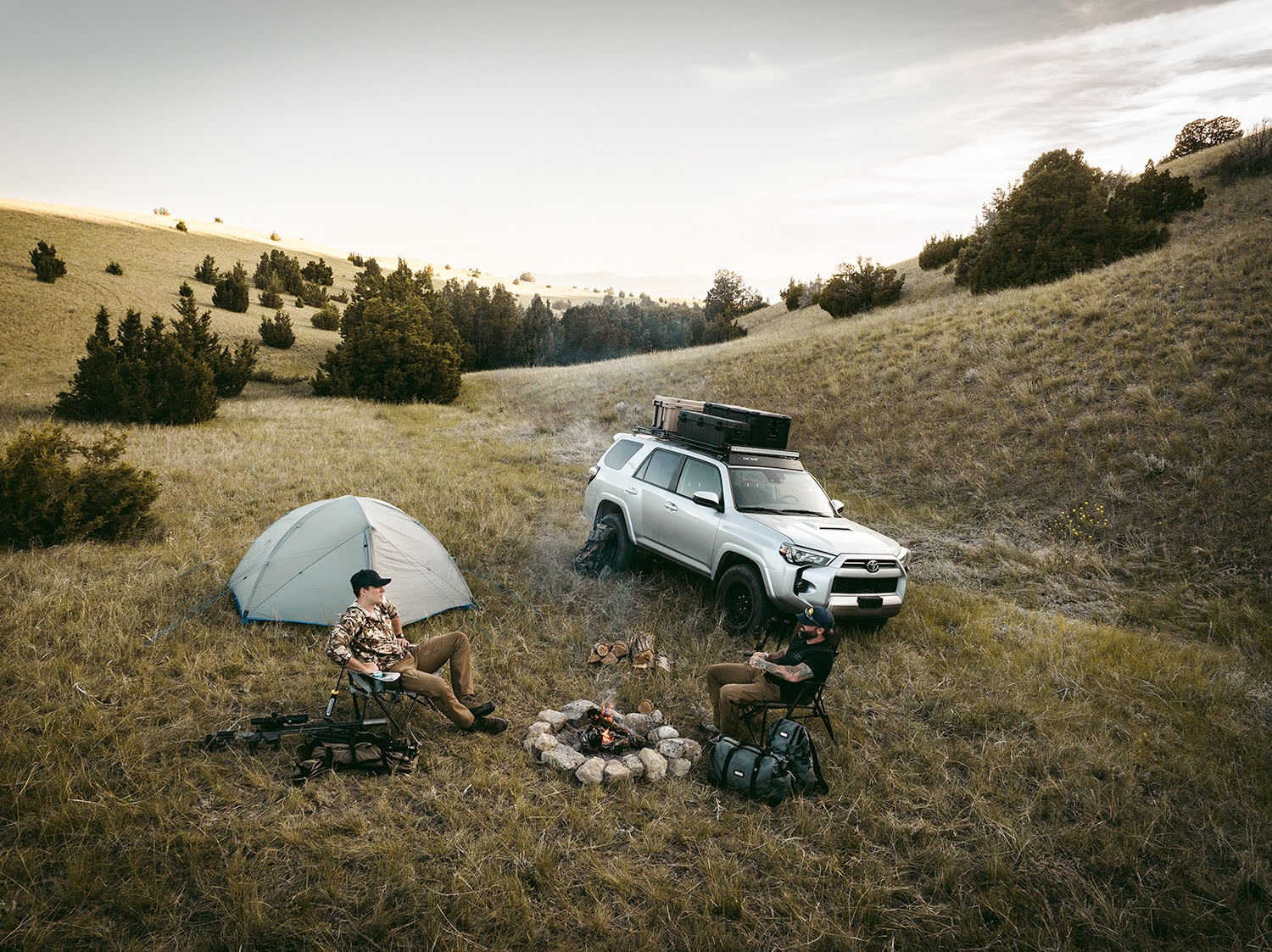
Roof Rack + Ladder: An Overlanding Power Couple
Overlanding differs from ordinary car camping in one crucial way: self-reliance. When distances lengthen and cell-service bars vanish, equipment failure morphs from nuisance to liability. A welded steel rack paired with a dedicated ladder forms a single overlanding ecosystem, built to shoulder hundreds of pounds of dynamic load while shrugging off trail chatter, ice storms, and torrential desert rain. The ladder becomes an everyday workhorse, hauling solar showers, hoisting skis, or offering a stable camera perch at sunset, while the rack delivers square footage rivaling a small pickup bed.
On the 4Runner, this duo also preserves the hatch’s full swing arc and protects paintwork from frantic boot scuffs. Properly engineered systems bolt to factory hard points, so weekend mechanics avoid cutting, drilling, or chasing rust. In under an afternoon, a stock SR5 can transform into an expedition-ready platform that still fits in a suburban garage Monday morning.
Beyond their practical applications, roof racks and ladders also open up a world of adventure possibilities. Imagine strapping down a kayak for a weekend of river exploration or securing a rooftop tent that elevates your sleeping quarters above the elements. The added height not only provides a better view of the surrounding landscape but also keeps you away from ground-dwelling critters that might disrupt your slumber. Furthermore, the versatility of these accessories allows for easy customization; whether you’re an avid mountain biker needing a bike mount or a photographer looking for a way to transport gear, the right rack and ladder combination can accommodate your unique needs.
Moreover, the aesthetic appeal of a well-designed roof rack can’t be overlooked. Many modern racks come with sleek, aerodynamic designs that not only enhance the vehicle’s rugged look but also improve fuel efficiency by reducing drag. This is particularly beneficial for long road trips where every mile counts. As you traverse through breathtaking landscapes, the sight of your fully outfitted 4Runner, complete with a sturdy ladder and a robust roof rack, becomes a testament to your adventurous spirit, inviting fellow travelers to share in the excitement of the open road.
Why Vehicle-Specific Racks Trump One-Size-Fits-All
Perfect Fit and Quiet Miles
Universal bars rely on generic clamps that rarely match Toyota’s roof contour, producing wind whistle and uneven pressure that can bruise window trims over time. A purpose-built solution follows the 4Runner’s stamped channels to the millimeter, lowering the profile, smoothing airflow, and maximizing sunroof clearance. Owners often report a ten-decibel cabin reduction compared with off-the-shelf alternatives, a blessing on thousand-mile interstates.
No-Drill Assurance
The 4Runner’s factory threaded bosses are strong enough to suspend the entire truck during assembly, so tapping into them makes engineering sense. By using those points, and only those points, an enthusiast preserves paint integrity, eliminates galvanic corrosion risk, and keeps Toyota’s warranty arguments at bay. The resulting install is fully reversible, leaving zero evidence for future resale.
Engineered Load Capacity
A tailored rack distributes weight along roof rails, door frames, and internal cross-members rather than pinching a few sheet-metal seams. That wide footprint enables higher static ratings for rooftop tents, often between 600 and 800 lb, and realistic driving loads around 300 lb. Numbers matter when potholes strike at 60 mph or when a snowstorm adds an unexpected hundred pounds of powder overnight.
Spotlight on the GOBI Racks 4Runner System
Ranger versus Stealth Basket
GOBI Racks offers two personalities for the 5th-gen 4Runner. The Ranger sports a 4-inch-deep basket channeling “old-school” off-road grit, ideal for owners who routinely lash jerrycans, firewood, and traction boards against its rounded perimeter. The Stealth trims depth to 2 inches and tucks tight against the roofline for low-clearance garages or tight tree tunnels. Both rely on fully welded, powder-coated steel that ships ready to bolt on with no assembly session, no rattling U-bolts down the trail.
Modular Add-Ons Built to Roam
A rack alone is only step one. GOBI Racks engineers match ladders, quick-swap crossbars, awning brackets, gas-strut hatch assists, and mesh sunroof inserts. Owners choose a front riser to shield dual-row lights or opt for a flat profile when stealth camping around height-restricted trailheads. Adjustable load bars sit flush for general freight or elevate to clear a rooftop tent and still carry kayaks. The entire catalog integrates through pre-threaded mounts, so upgrades never require re-painting or guessing torque specs.
Made in Colorado, Proven Everywhere
Every weld originates in Aurora, Colorado, where a small crew has refined the design since the early 2000s. Powder coat meets an anti-rust undercoat before each rack endures a multi-day cure cycle, mimicking years of road salt in accelerated fashion. On forums and Reddit threads, 4Runner drivers consistently post decade-old photos of their racks looking nearly factory fresh, testament to the finish and to the fact that solid steel, unlike modular aluminum, can be fully welded, reducing creaks over time.

Configuring the Perfect 4Runner Setup
Step 1: Choose the Basket Style
Select the deeper Ranger for frequent loose cargo or opt for the low-profile Stealth when aerodynamic drag and height limits rank higher. Both accept identical accessory families.
Step 2: Decide on a Front Riser
If a dual-row 40-inch light bar or tall cargo boxes top the wish list, the riser provides extra clearance and adds protection. Flat fronts favor single-row LEDs and clean lines.
Step 3: Dial in Sunroof and Crossbars
4Runner owners with factory sunroofs can keep the glass operational with a panoramic mesh insert or go full platform for maximum tie-downs. Standard adjustable crossbars sit flush; elevation bars create a second tier, perfect when a rooftop tent lives above fishing kayaks. All bars mesh with Thule and Yakima accessories, simplifying future upgrades.
Installation Walk-Through and Trail Tips
A pair of sawhorses, basic sockets, and a friend are the only tools required. The rack ships pre-assembled, so the heaviest task is hoisting the frame onto the roof. Bolts align with Toyota’s threaded inserts; adding blue thread-locker and torquing to 16 ft-lb keeps fasteners snug. Most owners finish in under three hours, including ladder fitment and hatch gas-strut swap.
After 100 miles, re-torque the hardware; thermal cycling and rack settlement can loosen new installs slightly. Periodic checks every oil change prevent surprises hundreds of miles from pavement. A quick wipe of silicon spray on ladder hinges wards off road salt, and seasonal wash-downs maintain the powder coat’s matte sheen.
Maintenance for the Long Haul
GOBI Racks designs static ratings up to 800 lb, but longevity still appreciates care. Store rooftop tents dry, avoid over-tightening metal-to-metal clamps, and rinse desert alkali off mesh floors. If rock chips breach the powder coat, a dab of touch-up paint seals the steel before rust can creep.
The ladder’s polypropylene tread inserts rarely crack, yet a yearly inspection catches accidental trail damage early. Gas struts last three to five years; replacements take two minutes and cost less than a tank of fuel. Treat the system like an extension of the vehicle’s suspension, as regular, brief check-ups pay dividends across thousands of adventure miles.
Frequently Asked Questions
Will a rack and ladder hurt my fuel economy?
Most 4Runner owners record a one-to-two MPG drop at highway speeds with the Stealth rack, slightly more with the taller Ranger. Aggressive mud-terrain tires often impact mileage far more than the rack itself.
Can the rear hatch still open fully with a full-size spare mounted?
Yes. GOBI Racks ladders are profiled to hug the tailgate contour, leaving ample clearance for factory or aftermarket spares and high-angle open positions.
Is drilling required for auxiliary lighting wiring?
No. Most owners route wires through an existing factory grommet behind the passenger taillight. The rack’s integrated light tabs accept single or dual-row bars, and weather-pack connectors simplify removal.
How does the finish stand up to road salt?
An anti-rust undercoat sits beneath the powder coat, acting as an additional sacrificial layer. Owners in the Northeast commonly report zero bubbling after five winters, provided they rinse salt residues periodically.
Final Thoughts
The Toyota 4Runner already embodies capability; adding a purpose-built roof rack and ladder elevates that spirit from capable to truly expedition-ready. By choosing a vehicle-specific, no-drill system such as the one crafted by GOBI Racks, owners invest in hardware that matches Toyota’s own ethos of durability and thoughtful design. The result is a rig prepared for dawn surf checks, alpine switchbacks, and everything between, without sacrificing the composure that makes the 4Runner an icon on pavement. Equip once, adventure often, and let the road decide the next story worth telling.
Discover the Ultimate Overlanding Companion
Ready to transform your 4Runner into an overlanding powerhouse? Visit GOBI Racks and explore our durable, no-drill Ranger Rack with two removable cross bars, designed to carry up to 300 pounds with ease. Enhance your vehicle’s functionality and aesthetics with our top-of-the-line roof racks, ladders, gear bags, and more. Don’t wait to elevate your adventure experience. Shop now and gear up for your next epic journey!