





Why Roof Top Tents Need a Specialized Rack
Perched high above the trail, a rooftop tent (RTT) offers sweeping views, cleaner campsites, and a welcome distance from curious wildlife. Yet that comfort comes at a cost: an RTT often weighs between 100 and 180 pounds before bedding, ladders, or annexes are added. Factor in dynamic forces created by sudden braking or rough terrain, and the actual stress on attachment points can easily triple while driving. A generic, clamp-on crossbar, designed primarily for weekend kayaks, simply is not engineered for those loads. To preserve safety, handling, and the longevity of a vehicle, adventure travelers turn to purpose-built roof racks capable of spreading weight evenly across the strongest factory mounting positions.
The right rack does more than hold weight. It protects the roof from dents, keeps wind noise in check, and provides multiple tie-down points so the tent remains rock-solid in gusty desert passes or on washboard forest roads. Equally important is compatibility with accessories such as awnings, traction boards, or solar panels that RTT owners frequently bolt on. A specialized rack, therefore, becomes the backbone of an entire overlanding setup, one that should be chosen with the same care as the tent itself.
Moreover, the installation of a specialized rack can significantly enhance the overall aesthetics of your vehicle. Many manufacturers offer racks in various finishes and styles, allowing you to customize your vehicle’s look while ensuring functionality. This can be particularly appealing for those who take pride in their vehicle’s appearance, as a well-designed rack can complement the lines and contours of the car, making it look more rugged and adventure-ready. Additionally, some racks come with integrated lighting options, which can illuminate your campsite or provide extra visibility during nighttime adventures, further enhancing the utility of your setup.
Another crucial aspect to consider is the ease of installation and removal. A specialized roof rack is typically designed for straightforward installation, often requiring minimal tools and time. This convenience is invaluable for those who frequently switch between different types of gear or who may need to remove the rack for everyday driving. Furthermore, many racks come with features such as quick-release mechanisms, allowing users to detach their RTT with ease when it’s time to hit the road again. This flexibility not only saves time but also ensures that your vehicle remains versatile for various activities, whether you’re heading out for a weekend camping trip or just running errands around town.
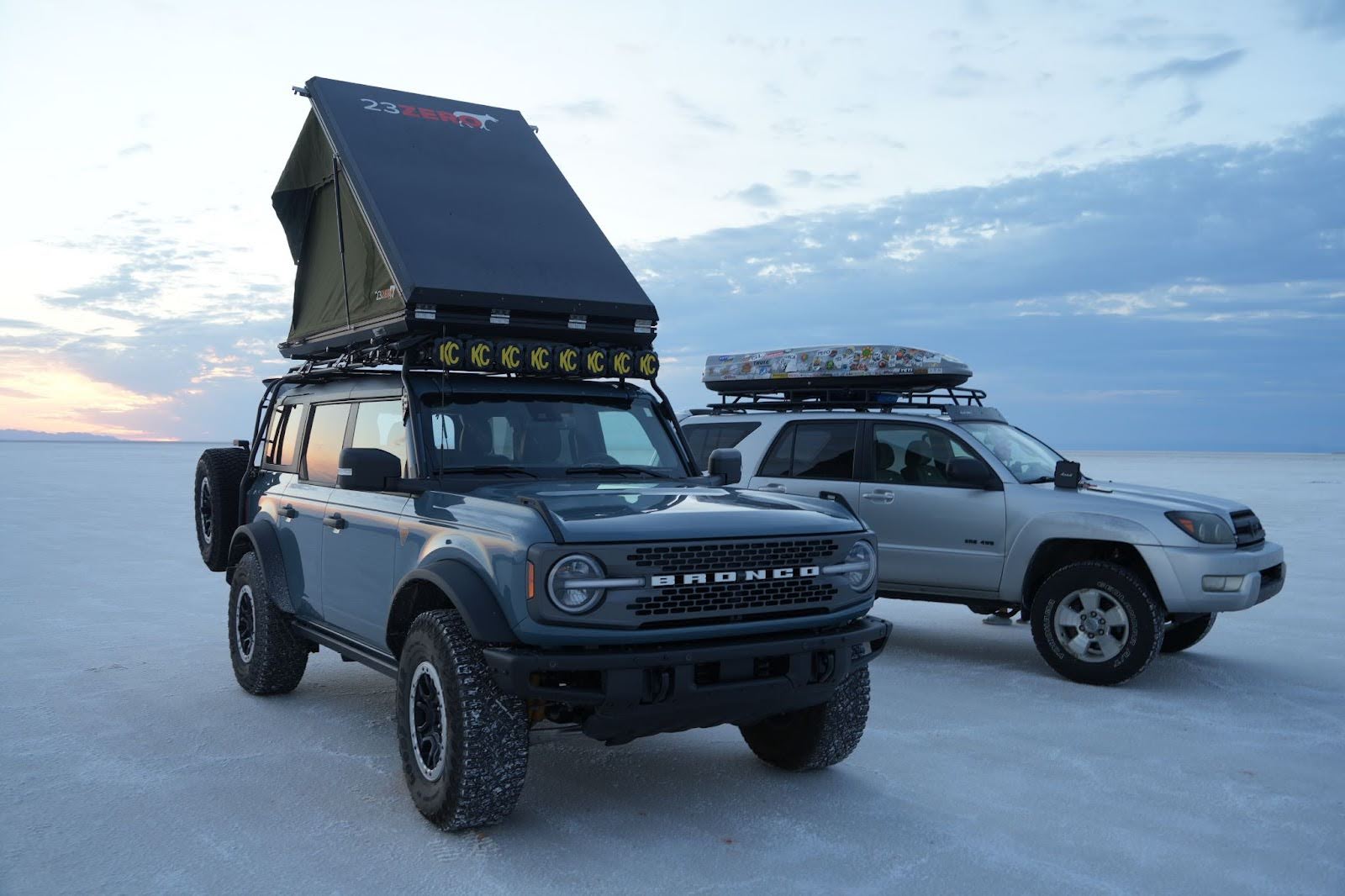
Meet GOBI Racks: A Purpose-Built Solution
GOBI Racks has spent more than two decades refining the craft of fully welded, no-drill roof racks. Rather than forcing a one-size-fits-all design onto dozens of vehicle roofs, the company engineers every rack around OEM mounting points on specific models from Jeep, Toyota, Ford, Land Rover, Mercedes, Lexus, Nissan, Honda, and the new Ineos Grenadier. That vehicle-centric approach preserves factory warranties, eliminates the need for irreversible holes in sheet metal, and ensures the load is transferred to the strongest part of the body structure. For owners of modern SUVs with panoramic glass panels or integrated antennas, that precision fit is priceless.
Two rack lines headline the catalog. The Ranger Rack delivers a classic, 4-inch-deep basket that evokes the heyday of early off-roading. The Stealth Rack trims the basket to a sleek, 2-inch profile prized by urban explorers who still need clearance for parking garages. Whichever style is selected, the skeleton remains the same: fully welded, powder-coated steel reinforced with an anti-rust undercoat and tested to static loads of roughly 800 pounds, more than enough for a tent, occupants, and gear.
Strength You Can Trust on Remote Trails
Strength numbers alone rarely tell the whole story, so it helps to look at construction methods. Every weld on a GOBI Racks roof rack system is completed before powder coating, creating a continuous, corrosion-resistant skin. Unlike modular racks that rely on dozens of bolts, this single-piece frame eliminates rattles, reduces long-term maintenance, and boosts rigidity. Overlanders who log tens of thousands of corrugated-road miles frequently report zero seam failures and no need to re-torque hardware at basecamp.
Laboratory figures translate directly into real-world security. An RTT’s diary of stress includes lateral pulls when campers move inside, torsion when only one side is occupied, and compression every time a gullwing door slams shut. To handle those multidirectional loads, GOBI Racks’ roof racks distribute weight through multiple mounting feet that trace the curvature of the roof, preventing point loading that often leads to dents or compromised seams. The confidence gained from that engineering means travelers focus on navigating slickrock ledges or fog-strangled coastal highways, rather than glancing skyward in worry.
Durability pays dividends when the weather turns ugly as well. Powder-coated steel shrugs off salty sea spray, and an anti-rust undercoat protects against mag-chloride used on many western mountain passes. Owners regularly boast of racks that still look new after a decade of four seasons in Colorado’s Front Range, where ultraviolet radiation and freeze-thaw cycles destroy lesser coatings in a single year.
No-Drill Installation: Protect Your Vehicle, Save Time
Few modifications age a truck faster than holes in the roof. Water intrusion, galvanic corrosion, and resale-value hits haunt rigs that were hastily drilled for universal racks. GOBI Racks roof racks sidestep all of those pitfalls by anchoring to factory threaded inserts or rain-gutter channels. The result is a Saturday-morning install that requires basic hand tools and zero bodywork skills. Many owners drive straight from their home garage to the trailhead the same day, RTV sealant still unopened in its tube.
The time savings do not end at the initial install. Every rack ships with pre-welded light tabs, integrated cable management holes, and optional gas struts for rear ladders. Upgrades added months or years later never require a stressful teardown. In an age where side projects consume precious weekend hours, a system that grows with the vehicle is more than a convenience; it is insurance against unfinished projects sidelining the next adventure.
Design Details That Make Life Above Ground Better
Comfort in a rooftop tent often hinges on the small details of the rack beneath it. Mesh platforms on GOBI Racks roof racks use 3/4-inch #9-gauge expanded steel, creating a flat surface that supports soft-shell or hard-shell tents evenly and doubles as a cargo deck when the tent is removed. The perimeter rail, fully welded and unique to the brand, keeps duffels from sliding off while maneuvering the tent during installation.
Wind shudder can quickly ruin sleep, so the front fairing sits at a carefully calculated angle to slice airflow before it meets the tent’s blunt face. In combination with smoothly radiused basket corners, many users report cabin noise levels nearly identical to stock. Integrated light tabs accommodate individual pods or a 40-inch LED bar, letting drivers illuminate late-night trailheads without stacking aftermarket brackets that frustrate aerodynamics.
A complementary ladder finishes the package. Rather than strapping an RTT’s included ladder over paint and taillights, the roof rack bolts a dedicated rear ladder directly into the hatch structure. Gas struts hold that hatch open even with the ladder attached, streamlining camp set-up and grocery runs alike.
Choosing the Right Configuration for Your Adventure
Because needs shift between daily commuting and multi-week expeditions, GOBI Racks offers a five-step customization process. Each choice balances weight, aerodynamics, and accessory compatibility, ensuring buyers neither overspend nor outgrow the system.
Rack Style: Ranger vs. Stealth
The Ranger’s 4-inch basket best accommodates bulky duffels or firewood tied beside the tent. The Stealth’s 2-inch profile slips under suburban parking structures yet still accepts an RTT thanks to its fully welded strength. Both share identical mounting geometry, so style becomes a question of aesthetic preference and clearance requirements.
Front Riser or No Front Riser
Serious night-trail travelers favor the front riser option, which shields dual-row spotlights from brush and shifting gear. Urban drivers who must clear low carports often delete the riser, keeping the rack flush while still retaining the protective perimeter rail. Either way, lighting remains secure because welded tabs sit behind the bar, preserving beam pattern and preventing glare.
Light Setup Options
Buyers can select straight vertical bars for individual pods or a curved span engineered around a 40-inch LED bar. The latter strengthens the basket while avoiding light blockage, crucial when an RTT overhangs the windshield. Although no lights ship with the rack, standard tab spacing accepts popular offerings from Baja Designs, KC HiLites, and Diode Dynamics without drilling.
Sunroof Considerations
Vehicles equipped with panoramic glass benefit from the dedicated Panoramic option, which leaves an opening above the factory panel for ventilation and stargazing. Those planning a full-time tent can instead choose a solid mesh platform, trading sky views for uninterrupted support. Importantly, the sunroof remains operational in all configurations, a testament to vehicle-specific engineering.
Crossbar Choices
Standard Adjustable Load Bars sit level with the basket, ideal for keeping a folding tent low. Elevation Adjustable Crossbars rise above the deck to create clearance for kayak hulls or fishing rod tubes beneath the tent’s footprint. Both bar types are compatible with Thule and Yakima clamps, allowing owners to recycle existing bike trays or cargo boxes rather than purchasing brand-new attachments.

Real-World Stories: Overlanders Put GOBI Racks to the Test
On r/Overlanding, one Colorado Tacoma owner recounts a three-state journey with a hard-shell tent bolted to a Stealth Rack. After 2,000 miles of desert washboard, his only maintenance was hosing off Moab dust; all weld beads remained uncracked, and no bolts loosened. Another Reddit reviewer publishes annual updates showing a decade-old Ranger Rack on a Jeep Wrangler JK that has weathered Maine road salt and Baja salt spray without corrosion creeping under the coating. These anecdotes mirror feedback collected by specialty shops, where installers routinely note that returns for defects are virtually nonexistent.
Rental fleets echo the sentiment. Several adventure-van companies in the Rockies have adopted roof racks for their Toyota 4Runner and Land Cruiser builds because the racks survive novice drivers’ mistakes: over-torqued straps, low-hanging branches, and stationary objects in parking lots. Less gear replacement means higher uptime and happier customers, reinforcing a cycle of trust that spreads by word of mouth.
Setting Up a Roof Top Tent: Step-By-Step With GOBI Racks
- Pre-Fit All Hardware: Place mounting rails and bolts inside the tent before hoisting it overhead. The mesh deck on a GOBI Racks roof rack gives plenty of hand clearance, so installation usually requires no helper beneath the rack.
- Hoist and Center: With two or three friends, lift the tent onto the rack. Center it front-to-back to maintain vehicle balance and ensure hatch clearance on rear-opening models. The fully welded perimeter rail offers a natural reference line, making alignment intuitive.
- Torque and Test: Tighten mounting plates to manufacturer specifications, generally between 10 and 14 ft-lbs. Lower the vehicle off jack stands if tires were removed, then drive a short loop around the block. Listen for rattles; odds are, none will appear, but early detection prevents campsite surprises. Within 30 minutes, camp-ready confidence replaces shop-floor anxiety.
Invest Once, Explore Everywhere
An RTT transforms any SUV into a rolling basecamp, but that transformation is only as reliable as the rack beneath it. By combining fully welded strength, no-drill installation, and a catalog of thoughtful options, GOBI Racks delivers a solution that outlasts trends and sometimes even the vehicle itself. Whether the next itinerary plots alpine lakes or red-rock deserts, securing a tent to a rack built for the task ensures the journey starts and ends with confidence.
Explore with Confidence with GOBI Racks
Ready to elevate your adventure and secure your rooftop tent with the ultimate in strength and convenience? Visit GOBI Racks to discover our robust selection of roof racks, including the versatile Ranger Rack with its removable cross bars and no-drill mounting system, capable of supporting 300 pounds with ease. Don’t forget to check out our ladders, gear bags, and other premium vehicle accessories designed to enhance your journey. Shop Now and transform your vehicle into the perfect overlanding companion.