





The gleam of aluminum panels under a mountain dawn, the smell of damp cedar drifting through a trailhead parking lot, and the reassuring clack of a ratchet strap; these are the sensory hallmarks of modern overlanding. Enthusiasts no longer settle for improvised tie-downs or universal rails that whistle at highway speed. Instead, a new generation of modular roof racks has emerged, capable of turning a daily SUV into a continent-crossing pack mule while still looking refined outside a coffee shop.
Behind this surge sits a blend of engineering innovation and cultural momentum. Adventure travel has leapt from niche forums to mainstream marketing campaigns, and manufacturers have responded with rooftop platforms that accept tents, recovery boards, fishing rods, and LED light bars in minutes. The result is a component ecosystem as configurable as a set of building blocks, yet robust enough to carry hundreds of pounds over washboard roads.
The following examination tracks the forces that made modular roof racks indispensable, highlights benchmark products such as GOBI Racks, and explores where the category may head next.

Why Overlanding Became a Multi-Billion-Dollar Hobby
Ten years ago, the term “overlanding” rarely appeared outside Australian magazines. Today, it anchors a U.S. gear segment valued at roughly $4 billion, according to 2023 Specialty Equipment Market Association estimates. Google Trends data shows a six-fold increase in searches for “overland build” between 2017 and 2022, echoing campground reservations that now routinely sell out by January.
Several catalysts explain that growth. First, the pandemic nudged travelers toward socially distanced recreation, turning 4×4 trips into a safer analogue for international vacations. Second, automakers leaned in with factory off-road trims: Toyota’s Trailhunter, Ford’s Bronco Wildtrak, and the Ineos Grenadier, which arrive pre-wired for auxiliary lighting and roof platforms. Finally, social media rewarded cinematic wilderness posts, and nothing frames a rooftop-tent sunset quite like a rugged rack system.
In addition to these factors, the rise of overlanding has also been fueled by a growing community of enthusiasts who share their experiences and knowledge online. Forums, blogs, and YouTube channels dedicated to overlanding have blossomed, offering everything from detailed gear reviews to tips on navigating challenging terrains. These platforms have become invaluable resources for both seasoned adventurers and newcomers alike, fostering a sense of camaraderie and shared passion for exploration. The appeal of overlanding lies not just in the journey itself, but in the stories and connections formed along the way, as travelers exchange insights and inspire one another to venture further into the wild.
Moreover, the environmental consciousness surrounding overlanding has evolved significantly. Many enthusiasts are now prioritizing sustainable practices, advocating for Leave No Trace principles to minimize their impact on the natural world. This shift has led to the development of eco-friendly gear and vehicles designed to tread lightly on the earth while still providing the comforts of home. As a result, overlanding is increasingly seen not just as a hobby, but as a responsible way to engage with nature, encouraging a deeper appreciation for the landscapes that adventurers traverse. The combination of adventure, community, and environmental stewardship has solidified overlanding’s place as a thriving and multifaceted hobby in today’s outdoor culture.
The Evolution From Fixed Rails to Modular Systems
Early roof racks, think 1970s station-wagon bars, relied on two static crossmembers. They carried skis well enough, yet sagged under larger loads and resisted adaptation. As expedition culture filtered into North America, overlanders demanded flexibility: a place for a high-lift jack one weekend, a kayak the next, and a surfboard after that. The answer arrived in the mid-2000s when smaller fabrication shops melded welded steel baskets with bolt-on accessories, birthing the modern modular rack.
This evolution was not merely a response to consumer demand but also a reflection of a broader cultural shift towards adventure and exploration. As more people sought to escape the confines of urban life, the need for versatile, durable gear became paramount. The rise of social media platforms further fueled this trend, allowing enthusiasts to share their experiences and showcase their gear, creating a community that valued both functionality and aesthetics. This cultural backdrop set the stage for the innovative designs that would soon dominate the market, as manufacturers began to understand that a roof rack was not just a utility item, but an extension of one’s lifestyle.
Manufacturing Advances Redefined Strength-to-Weight Ratios
Three breakthroughs underpinned the shift. Computer-aided design allowed tighter tolerances, preventing stress risers that once plagued traditional tube racks. Laser-cutting and CNC bending lowered manufacturing variance, so bolt holes lined up perfectly on arrival. Finally, durable powder-coat systems paired with zinc undercoats delivered coastal-grade corrosion resistance without the weight penalty of heavy galvanizing.
These technological advancements not only enhanced the performance of the racks but also opened the door for customization. With the ability to produce components with precision, manufacturers began offering a range of accessories tailored to different activities, from bike mounts to cargo boxes. This modularity meant that users could easily swap out parts based on their weekend plans, making their vehicles more adaptable than ever. The result was a new breed of roof racks that catered to the diverse needs of outdoor enthusiasts, allowing them to seamlessly transition from daily driving to weekend adventures.
Design Language Kept Pace With Aesthetics
While capability improved, so did curb appeal. Rounded light cut-outs, recessed panels, and stealth roofs drew inspiration from automotive body lines. The shift reflected a consumer who expects gear to match a $60,000 truck’s charisma, not merely cling to it. The result: racks that pass homeowners’ association rules on Monday and conquer canyon crawls on Saturday.
This emphasis on aesthetics also led to a broader trend in the outdoor gear industry, where form began to complement function. Brands started collaborating with designers to create products that not only performed well but also looked good on the road. The integration of sleek lines and modern finishes into roof rack designs made them appealing to a wider audience, including those who may not have previously considered themselves outdoor enthusiasts. As a result, roof racks became more than just accessories; they evolved into style statements that reflected the owner’s personality and commitment to adventure, further solidifying their place in the automotive accessory market.
Defining Features of Today’s Modular Roof Racks
Whether sourced from boutique weld shops or larger brands, modern roof racks share several core traits that separate them from yesterday’s crossbars.
No-Drill Installation Protects Vehicle Integrity
Most late-model SUVs hide factory mounting hard points beneath removable trim. High-end rack builders capitalize by designing foot packs that align perfectly, allowing owners to bolt the system on in an afternoon. No holes, no warranty worries, and easy removal if the vehicle goes up for sale. For example, GOBI Racks ships its Toyota 4Runner platform with stainless hardware tailored to the truck’s roof channel, guaranteeing a leak-free seal. This innovative approach not only preserves the vehicle’s structural integrity but also ensures that the installation process is user-friendly, making it accessible even for those who may not consider themselves mechanically inclined. As a result, more outdoor enthusiasts can confidently equip their vehicles for adventure without the fear of damaging their investment.
Impressive Static and Dynamic Load Ratings
Load ratings matter because an SUV in motion experiences far higher forces than one parked with a tent erect. Quality racks now advertise two numbers: a static rating of often 700–800 lb for stationery scenarios like rooftop-tent camping, and a dynamic rating of around 300 lb for highway travel. Achieving those figures requires TIG-welded joints, triangulated basket rails, and support feet that distribute stress across multiple factory threads rather than a single bolt. This engineering prowess not only enhances safety but also allows for a greater variety of gear to be transported, from kayaks and bicycles to heavy-duty cargo boxes. As outdoor activities become more diverse, these robust load ratings empower adventurers to explore new terrains and experiences without compromising on gear reliability.
Accessory Ecosystems Encourage Personalization
The magic of a modular rack lies in its mounting channels and perimeter rails. Add-on brackets accept awnings, traction boards, recovery shovels, propane holders, bike trays, and floodlights. Some manufacturers even sell quick-swap panels that trade mesh flooring for slot-and-tab MOLLE plates. With dozens of accessory positions, owners can rearrange their loadout for snow trips, surf season, or elk camp without drilling new holes. This adaptability not only caters to the specific needs of each outing but also fosters a sense of community among users who frequently share their custom setups online. Social media platforms are filled with inspiration, showcasing unique configurations that highlight the versatility of these racks, encouraging others to innovate and personalize their own setups. As a result, the modular roof rack system becomes more than just a functional accessory; it transforms into a canvas for adventure enthusiasts to express their individuality and lifestyle through their gear choices.
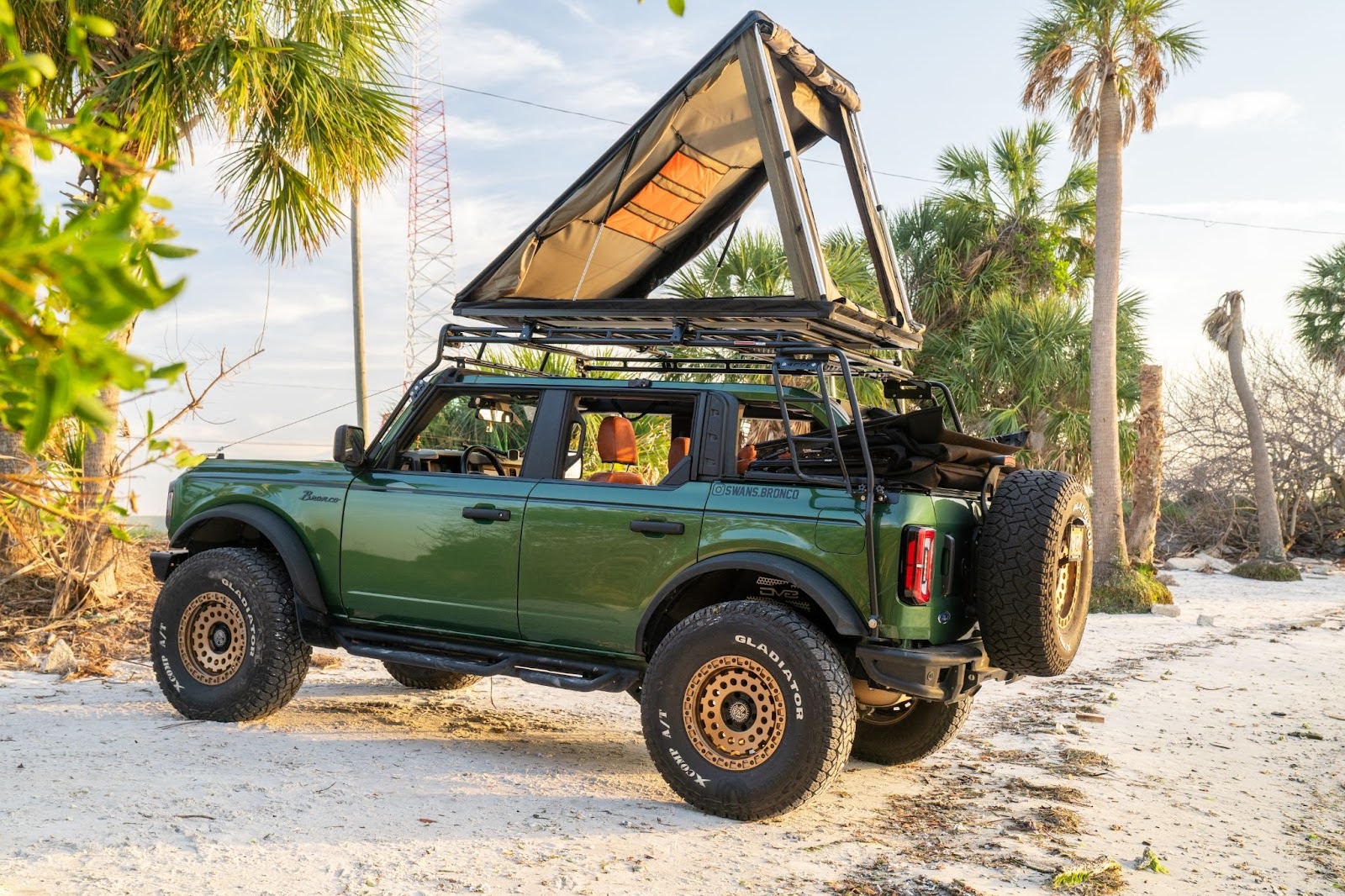
GOBI Racks: A Benchmark for Build Quality
Among U.S. manufacturers, few receive more consistent praise than Colorado-based GOBI Racks. Founded in 2000 under the Intelligent Design 2000 umbrella, the company set out to prove that utility need not sacrifice style. Two decades later, its products sit atop Jeep Wranglers, Mercedes G-Classes, and the new Ineos Grenadier, each one tailored to the roofline in question.
The catalog revolves around two core designs. The Ranger Rack sports a 4-inch-deep basket reminiscent of classic safari trucks and excels at retaining bulky cargo. The Stealth Rack offers a slim 2-inch profile that clears low parking garages while providing full-welded strength. Both styles are powder-coated inside and out, treated with anti-rust undercoats, and rated for 800 lb static loads, numbers verified by customer anecdotes on Reddit threads where users recount years of abuse without a single crack weld.
Customization runs deep. Buyers decide whether to include a raised front riser for dual-row LEDs, pick between multi-light or 40-inch-bar configurations, and order standard or elevated crossbars compatible with Yakima and Thule cradles. Sunroof lovers can specify panoramic cut-outs that preserve skylight views, while those prioritizing cargo can select full-mesh platforms. The kicker: every GOBI Racks roof rack system still bolts on with factory mounting hardware; no drill, no headache.
How to Choose the Right Modular Roof Rack
Shopping for a rack means balancing capacity, clearance, and compatibility. Start with dynamic load demands: a lightweight carbon canoe may only need 150 lb, but a clamshell rooftop tent often tips the scales beyond 180 lb. Verify both rack and vehicle roof ratings before checkout. Next, measure garage door clearance; a tall Ford Bronco on 35-inch tires plus a basketed rack can exceed seven feet quickly. Lastly, scrutinize accessory lineups. Brands such as GOBI Racks offer made-to-fit ladders, gas-strut assisted hatch lifts, and awning brackets that eliminate home-built solutions.
Future Trends: Smart Platforms and Sustainable Materials
Three innovations loom on the horizon. First, integrated wiring harnesses will make plug-and-play lighting ubiquitous, replacing the current tangle of DIY loom beneath weather stripping. Second, recycled aluminum extrusions stand to reduce carbon footprints without compromising strength, especially as battery-electric SUVs demand weight savings. Third, sensor-enabled “smart” racks may monitor cargo strap tension or broadcast GPS coordinates for lost gear, features already prototyped in the aerospace cargo industry.
The Platform That Liberates Adventure
Overlanding’s ascent transformed the humble roof rack from afterthought to centerpiece. Modular systems now enable safer, cleaner, and more creative travel setups, empowering adventurers to chase remote horizons without compromising daily practicality. Companies like GOBI Racks illustrate how meticulous engineering and tasteful design can coexist, proving that the best equipment marries resilience with inspiration.
Discover the Ultimate Overlanding Companion
Ready to elevate your overlanding adventures? Look no further than GOBI Racks, where you’ll find the perfect blend of functionality and style for your vehicle. Explore our range of rugged roof racks, including the versatile Ranger Rack with its no-drill mounting system and 300-pound load capacity. Don’t forget to check out our ladders and gear bags to fully outfit your journey. Transform your car into an adventure-ready rig and Shop Now to start your next expedition with confidence.