




Weekend camping runs, cross-country ski trips, long surf safaris; every adventure starts with a single, nagging question: how will all the gear fit? Most SUVs and crossovers leave the factory with a pair of modest crossbars, and many drivers understandably assume those rails provide all the carrying ability they will ever need. Yet a growing number of explorers are swapping those slim factory bars for full-size aftermarket roof racks, turning the top of the vehicle into a hardworking cargo deck. What drives that change? The answer lives at the intersection of strength, flexibility, aesthetics, and overall ownership cost. Unpacking those factors reveals clear, quantitative differences that can help every driver choose the best solution for daily errands or remote overlanding.
The Two Systems in a Nutshell
Factory bars, sometimes called OEM rails, are usually a pair of extruded aluminum or steel tubes that span side-to-side or run the length of the roof. Automakers design them for general luggage: a couple of duffels, perhaps a small bike carrier, and nothing tall enough to drag on a parking-garage beam. Standard dynamic load ratings hover between 75 kg and 100 kg (165-220 lb), and static limits are rarely published, leaving cautious owners to stay well under 200 lb when the vehicle sits still. The slim dimensions keep manufacturing costs low and preserve wind-tunnel efficiency, which is why almost every marketing photograph shows the rails empty.
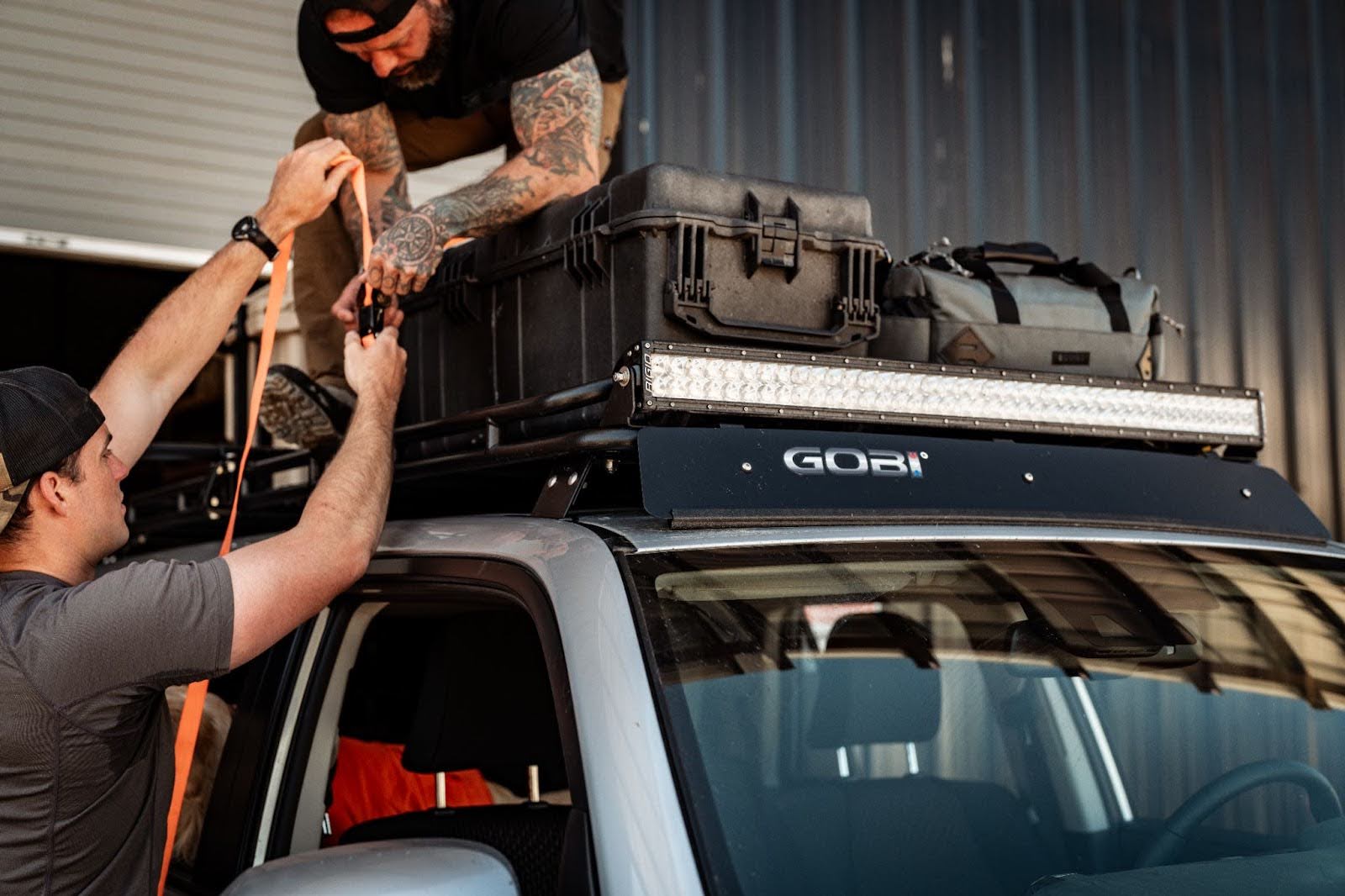
Aftermarket rack roofs replace or clamp onto those stanchions with a welded, basket-like structure that covers most or all of the roof. Versions such as the GOBI Racks Stealth and Ranger platforms employ fully welded steel tubing, a powder-coat finish, and an anti-rust undercoat. Static load capacities reach 800 lb, while real-world dynamic ratings of roughly 300 lb let owners transport rooftop tents, recovery boards, jerrycans, or a week’s worth of whitewater kayaks. In simple terms, the factory bars carry a family’s beach umbrellas; a well-engineered rack roof hauls the entire family’s adventure lifestyle.
One of the key advantages of aftermarket racks is their versatility. Many models come equipped with a variety of mounting options, allowing users to customize their setup according to specific needs. For instance, some racks feature adjustable crossbars that can be repositioned to accommodate different types of cargo, from surfboards to ladders. Additionally, many aftermarket solutions are designed with modularity in mind, enabling users to add accessories such as bike mounts, cargo baskets, or even solar panels. This adaptability not only enhances the functionality of the vehicle but also allows for a more personalized approach to outdoor adventures.
Moreover, the aesthetic appeal of aftermarket racks can significantly enhance the overall look of a vehicle. With sleek designs and finishes that can complement or contrast with the vehicle’s color, these racks often become a statement piece. Enthusiasts frequently choose racks that reflect their personal style or the ruggedness of their lifestyle, making them not just practical additions but also integral to the vehicle’s identity. Whether it’s a weekend camping trip or a cross-country road adventure, the right rack can transform a standard vehicle into a capable expedition-ready machine, ready to tackle any terrain or challenge that lies ahead.
Strength and Load Ratings: Numbers That Matter
The most dramatic difference between the two systems is strength. Factory bars bolt to the thinnest approved portion of the roof sheet-metal, often using riv-nuts or self-tapping screws. Over rough forest roads, those connections see shock loads many times higher than on pavement. When an SUV pounds into a pothole at speed, a 165-lb rooftop payload can momentarily weigh more than 500 lb. Engineers know this and assign conservative ratings, but even a properly loaded OEM rail can flex enough to loosen fasteners over time.
A rack roof engineered for overlanding answers with thicker gauge steel, reinforced feet, and additional contact points. The powder-coated, fully welded perimeter distributes force across a wider footprint and eliminates the bolt-together seams that can rattle loose after thousands of washboard miles. Independent user feedback on enthusiast forums routinely reports zero movement after half a decade of heavy use, validating the 800 lb static rating. For drivers eyeing rooftop tents, average weight 130 lb empty, 450 lb when two adults climb in, that added safety margin is not optional; it is essential.
Versatility on the Trail and in Town
Capacity figures are only the first chapter. What owners often discover is that versatility, the sheer range of items that can be mounted, determines whether the money feels well spent. Factory bars accept clamp-on accessories from Thule or Yakima, but spacing is fixed, and the round-tube profile forces loads toward the center. Tall cargo such as coolers or recovery boards must be strapped vertically, raising the vehicle’s overall height.
A purpose-built rack roof acts as a flat work surface. Tie-downs can attach to any rung, and modular crossbars provide a secondary layer for specialized gear. The GOBI Racks roof racks lineup, for example, offers standard adjustable load bars that sit flush with the basket and elevation crossbars that hover above it, leaving space beneath for traction boards or ski poles. Owners can configure gas-strut rear ladders, awning brackets, shovel mounts, or 40-in LED light bars in minutes. The result is a platform that morphs from weekday lumber hauler to weekend kayak shuttle without re-torquing a single bolt.
Accessory Integration: Future-Proofing Your Investment
Technology and hobbies evolve; today’s mountain bike may be tomorrow’s fly-fishing drift boat. Factory rails limit that evolution because every new activity usually requires a different clamp or adapter, each adding height and noise. A welded rack system anticipates change by incorporating a top perimeter rail and side channels. Lighting, solar panels, and rooftop antennas can be added later without redesigning the base structure. Over a decade of ownership, those incremental upgrades often exceed the cost of the original rack, making a future-proof foundation valuable from day one.
Installation, Maintenance, and Your Vehicle Warranty
One argument in favor of factory bars is simplicity: they arrive pre-installed and validated by the automaker’s warranty department. Yet that warranty seldom covers the accessories bolted on later. Aftermarket racks have historically required drilling into the roof, an intimidating prospect that can void corrosion guarantees. Modern premium racks have solved that pain point. The mounting feet on GOBI Racks roof racks anchor to existing threaded bosses hidden beneath plastic trim, preserving structural integrity and allowing DIY installation with basic hand tools. No permanent holes, no silicone sealant, no panicked call to the dealer.
Maintenance follows the same low-stress pattern. Factory rails need periodic checks for loosening hardware, especially after winter freeze-thaw cycles. A powder-coated rack demands little more than fresh water rinses after salted roads. Because the welds remove the pressure points found in bolt-together systems, stress cracks are virtually unheard of. When the time comes to sell the vehicle, the rack can be unbolted and transferred, restoring a stock roof and retaining resale value.
Noise, Aerodynamics, and Fuel Economy
Wind noise is a common fear when owners contemplate bigger roof equipment. Automakers spend millions refining airflow, and anything added later disturbs that harmony. Surprisingly, real-world testing shows the difference between factory bars and a low-profile rack to be smaller than expected. The 2-in-tall Stealth basket from GOBI Racks sits close to the sheet-metal and integrates a front fairing that directs air above the cargo deck. Independent decibel meter readings on late-model Toyota 4Runners reveal a 2–3 dB increase at 65 mph—roughly the sound of turning on a dashboard fan, far below tire or mirror noise on all-terrain vehicles.
Fuel economy follows a similar pattern. A 2023 Bronco tested by an overlanding YouTube channel showed a 0.7 mpg drop after installing a full rack and running empty, but the same truck lost 1.5 mpg when two kayaks rode on factory bars. The takeaway: frontal area and cargo profile matter more than the rack itself. Slim baskets enable cargo to sit lower, and that lower height often offsets the minor drag from additional cross-tubes.

Looks Count: Design Integration
Gearheads may claim form follows function, yet a roof rack is a visual statement made every time the vehicle pulls into a trailhead or a parent-teacher conference. Factory bars are intentionally understated; they are invisible unless loaded. A full rack, by contrast, can enhance the SUV’s posture, creating a cohesive overland aesthetic that photography lovers prize. The 4-in-deep Ranger basket nods to classic off-road rigs, while the Stealth’s tidy 2-in sidewall mirrors modern body lines.
Attention to detail drives that visual harmony. Each GOBI Racks roof rack model is welded to match the roof contour of specific vehicles: Jeep Wrangler, Lexus GX, Ineos Grenadier, Mercedes G-Class, and more. The side profile aligns with drip rails and rear spoilers, making the rack look factory-installed rather than an aftermarket bolt-on. Powder-coat color is matched to OEM black trim, and optional front risers protect auxiliary lights without protruding above the windshield. The result is gear that looks like part of the design brief, not a last-minute accessory.
Budget vs Lifetime Value
No comparison is complete without numbers. A typical set of OEM replacement bars lists for $250–$450, and basic clamp-on accessories run $150 each. Add one bike tray, one ski carrier, and one cargo basket, and the invoice climbs near $1,000. Yet none of those attachments improve load rating; they only reorganize the same weight. Full rack roofs start around $1,500 for entry-level aluminum kits and approach $2,000–$2,300 for US-made, steel, fully welded systems such as GOBI Racks roof racks. That up-front delta can feel daunting.
However, cost-per-year paints a different picture. A properly coated steel rack is expected to outlast the vehicle, with many owners transferring the system to their next SUV via new mounting hardware. Accessories integrate directly, eliminating the need for separate bike trays, ski clamps, or light brackets. Insurance companies also look favorably on welded racks because they reduce the risk of cargo flying off during a collision, potentially lowering premiums over time. When amortized across a decade, especially for families who camp, ski, bike, and surf, the premium rack frequently proves the cheaper choice.
Which One Should You Choose?
If urban parallel parking and occasional Ikea runs describe daily life, factory bars meet basic needs while preserving a whisper-quiet cabin. Add a soft cargo bag for holiday travel, and the system remains competent. Yet the moment the itinerary involves rooftop sleeping, extended dirt-road travel, or multiple sports requiring simultaneous gear, the needle swings toward a purpose-built rack roof. The safety margin alone, 300 lb dynamic versus 165 lb, justifies the upgrade when human life rests under a rooftop tent.
Decision-making can follow a simple flowchart. Start by listing planned activities and the heaviest combined load. Multiply that weight by 1.5 to account for shock forces. If the number exceeds the OEM rating, or if the accessory cost exceeds half the price of a welded rack, choosing a full system delivers better value. Among the premium options, welded, no-drill products like GOBI Racks roof racks occupy a sweet spot: strong enough for Rocky Mountain overlanding yet sculpted enough for downtown Denver parking garages. Selecting between the deeper Ranger basket and the low-slung Stealth becomes a matter of style and clearance, not structural performance.
The Bottom Line
Roof storage once meant trading elegance for utility. Today, smart engineering provides a spectrum of solutions that let owners tailor capacity, looks, and budget. Factory bars remain a lightweight, affordable answer for casual use. Full rack roofs amplify that foundation with exponentially greater strength, flexibility, and visual appeal, turning the roof into a legitimate workspace and campsite. For anyone who measures weekends in trail miles rather than Netflix episodes, the robust option pays dividends in safety, convenience, and pride every time new territory unfolds beyond the windshield.
Ultimately, the real difference between rack roofs and factory bars is not merely the metal on top of the vehicle; it is the freedom that metal grants. Whether the mission calls for a rooftop tent, 40-inch light bar, or simply enough space for everyone’s skis, a thoughtfully engineered platform like the offerings from GOBI Racks transforms the ordinary roof into an open invitation to roam farther, stay longer, and bring everything that makes adventure complete.
Explore with Confidence with GOBI Racks
Ready to elevate your adventure and take on any challenge the great outdoors throws your way? Look no further than GOBI Racks for the ultimate in durability, versatility, and style. Our Ranger Rack, featuring two removable cross bars, a no-drill mounting system, and a 300-pound load capacity, is just the beginning. Discover our full range of roof racks, ladders, gear bags, and vehicle accessories designed to enhance your journey. Don’t wait to transform your vehicle into the ultimate adventure companion. Shop Now and start creating memories that last a lifetime.