




Weekend singletrack, mid-week commutes, cross-country road trips; modern cyclists expect a gear hauler that feels just as competent beneath downtown high-rises as it does on rutted Forest Service roads. Choosing the best bike rack is therefore less about a single specification and more about finding the sweet spot between rugged durability, ease of use, and vehicle compatibility. The guide below weighs every factor that matters, highlights current statistics on cycling growth, and explains how premium solutions such as GOBI Racks translate overlanding know-how into daily practicality.

The Growing Demand for Reliable Bike Transport
Data from the National Household Travel Survey show that U.S. cycling trips have climbed more than 20% during the past five years, while the NPD Group notes that sales of high-value mountain and e-bike models, often weighing 50 pounds or more, have surged by double digits. With heavier frames, battery packs, and pricier components now commonplace, riders can’t gamble on flimsy carriers that rattle loose after a pothole. A quality bike rack protects both equipment and vehicle, translating directly into a longer service life and fewer repair bills.
Convenience also plays a role. A Transit app survey found that 63% of urban riders mix cycling with car or public transportation segments each week. Quick-loading features, tool-free adjustments, and weather-resistant finishes have become must-haves rather than nice-to-haves. Topping everything off is the move toward multi-sport weekends, with kayaks in the spring, skis in the winter, and bikes year-round, making modular roof systems especially attractive.
As the trend toward cycling continues to gain momentum, manufacturers are responding by innovating in design and functionality. Many bike racks now come equipped with integrated locking mechanisms, providing an additional layer of security for valuable bikes. This feature is particularly appealing in urban settings where bike theft can be a concern. Moreover, advancements in materials have led to lighter yet more durable racks, allowing for easier handling without compromising strength. Riders are increasingly looking for solutions that not only meet their transport needs but also enhance their overall cycling experience.
The rise in cycling popularity is also influencing local infrastructure development. Cities are investing in dedicated bike lanes, parking facilities, and bike-sharing programs, creating a more cyclist-friendly environment. This shift is encouraging more people to consider cycling as a viable mode of transport, further driving the demand for reliable bike transport solutions. As urban planners recognize the benefits of reducing traffic congestion and promoting healthier lifestyles, the integration of cycling into everyday life is becoming more seamless, making it essential for bike transport systems to evolve in tandem.
Main Bike Rack Styles at a Glance
Hitch-Mounted Racks
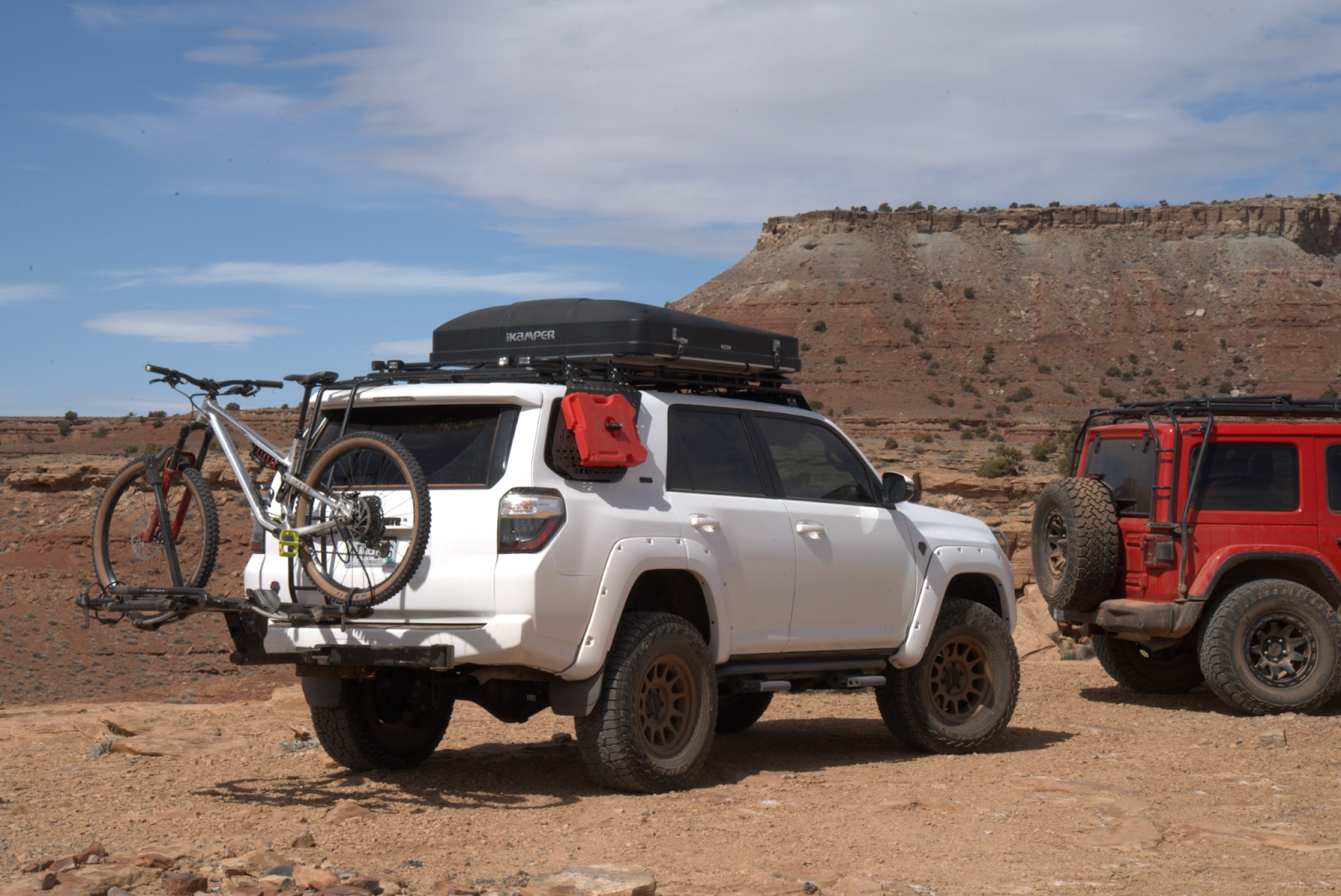
Bolting directly into a vehicle’s receiver hitch, these carriers support weight through the frame, wheels, or a combination of both. The hitch location keeps bikes low, easing installation, and models with swing-away arms preserve tailgate access. Higher-capacity versions can handle 60 lb e-bikes and fold upright when not in use. The trade-off is ground-clearance loss, which may matter to off-roaders navigating steep departure angles.
Roof-Mounted Racks
Roof options fasten bikes to crossbars or specialized baskets, freeing the hitch for trailers or recovery gear. Their elevated position safeguards frames from road grit and parking-lot scratches, while some designs support a variety of sports attachments. The downside is increased lift height and aerodynamic drag. Choosing a robust base platform, such as the welded steel systems from GOBI Racks, adds stability and theft deterrence, ensuring bikes stay rock-solid even on corrugated washboard.
Trunk and Spare-Tire Racks
Strap-on carriers remain popular among sedan owners and budget shoppers. They generally weigh less and cost less than hitch gear but rely on paint-to-paint contact and nylon webbing. Over time, these straps can stretch, and foam pads grind grit into the clearcoat. For serious mountain-bike riders or anyone planning dusty backroads, an all-metal solution is objectively safer for vehicle and cargo alike.
Nine Critical Buying Factors
1. Load Capacity and Frame Protection
Check the maximum supported weight per bike and for the entire rack. If an e-mountain bike tips the scale at 58 lb, there must be headroom beyond that figure to account for mud buildup or integrated accessories. Look for wheel cradles lined with rubber or adjustable arms that grip only the tires. This minimizes stress on carbon-fiber frame tubes.
2. Vehicle Compatibility and No-Drill Installation
Many manufacturers advertise “universal” fit, yet mounting plates may still require drilling. Roof carriers inspired by overlanding culture, like GOBI Racks, clamp into factory mounting points, preserving the resale value of SUVs, trucks, and crossovers alike. No-drill designs also simplify DIY installation—an advantage cited repeatedly in online owner forums.
3. Durability of Materials
Weather-proof powder coat, fully welded joints, and anti-rust undercoats greatly outlast spot-welded aluminum. GOBI Racks uses grade-8 hardware and rates static loads up to 800 lb, a spec overbuilt for bikes yet reassuring when the rack doubles as a work platform or rooftop-tent base.
4. Security Features
Integrated cable locks, tamper-resistant fasteners, and hidden mounting bolts all discourage opportunistic theft. On roof platforms, perimeter rails make it easier to run U-locks through frames and crossbars. Hitch designs, meanwhile, should include wobble reducers and keyed hitch pins.
5. Aerodynamics and Fuel Economy
A Transport Canada study recorded fuel-range losses of 4–10% for roof-rack systems, depending on speed. Low-profile baskets like the Stealth series from GOBI Racks cut turbulence without sacrificing strength, helping drivers recoup a portion of that penalty on long interstate drives.
6. Versatility for Multi-Sport Use
If the same platform must carry skis in January and surfboards in July, opt for removable crossbars or adjustable load bars. Elevation-style crossbars that sit on top of a rack keep space free underneath for traction boards or camp tables, an efficient way to expand storage without ballooning vehicle height.
7. Ease of Loading
Swing-away arms, drop-down platforms, and slide-out trays mean less lifting. For roof systems, a side ladder, available as a bolt-on from GOBI Racks, reduces the awkward overhead reach that discourages shorter riders from rooftop storage solutions.
8. Compliance with Local Regulations
Some U.S. states require auxiliary license-plate lights if bikes obscure factory lighting. Others mandate that loads not extend more than four feet beyond bumpers without flags. Hitch designs featuring integrated plate mounts and LED light bars solve these issues in one step.
9. Warranty and After-Sales Support
Extended coverage signifies manufacturer confidence. Many premium brands offer limited lifetime warranties on the frame but shorter terms on finish or hardware. Being able to download detailed installation PDFs or watch model-specific videos, services provided free of charge by GOBI Racks, shortens the learning curve for new owners.
Off-Road Capability versus Urban Practicality
True all-terrain performance involves more than clearing obstacles. Vibration fatigue can loosen bolts, while airborne dust infiltrates cam-lock mechanisms, and sudden body flex twists mounting brackets. Roof racks built for overlanding feature thicker gauge steel and fully welded seams that resist long-term metal fatigue. High-density foam padding on wheel trays further shields carbon rims from harmonic chatter over washboard surfaces.
Urban drivers face a different challenge set. Underground garages demand tight height tolerances; parallel-parking bumps could smash exposed taillight bars; and removable racks must lock up in seconds to deter theft. Adjustable crossbars and slim baskets therefore offer a reasonable compromise, while swing-away hitch carriers protect against fender benders. Selecting a rack that transitions seamlessly between these environments means prioritizing tool-free adjustability, compact stowage, and aerodynamic lines.
Why Overlanders and Daily Commuters Trust GOBI Racks
Colorado-based GOBI Racks carved its reputation in the 4×4 community by building fully welded steel roof platforms that bolt to factory points, no holes, no compromises. Two signature styles anchor the lineup. The Ranger Rack features a four-inch-deep basket for that classic off-road silhouette and the ability to lash bulky duffels beside bike trays. The Stealth Rack trims depth to two inches, gaining clearance for low-ceiling garages while retaining an 800 lb static load rating.
Customization remains the brand’s hallmark. Owners can select a front riser to shield off-road lights, specify a 40-inch LED light-bar cut-out, or opt for the flat “no front riser” look favored by minimalist designers. Sunroof options allow panoramic openings, mesh inserts, or solid expanded metal platforms. Crossbars come in standard or elevation form, each compatible with Yakima, Thule, and most clamp-on bike mounts, allowing enthusiasts to keep existing trays while upgrading the underlying structure.
Real-world testimonials back up the spec sheet. On Reddit’s r/overlanding, one driver writes, “I’ve had a GOBI Racks Stealth for a few months and absolutely love it… easy to install, how it looks, and how it functions.” Another adds, “Had my rack for years, sturdy, great quality, perfect fit.” These anecdotes align with the company’s Made-in-USA ethos: small-team fabrication in Aurora, Colorado, followed by meticulous powder coating and anti-rust finishing.
Installation and Long-Term Maintenance Tips
Mounting any bike rack starts with reading load-limit tables in both the carrier and vehicle owner’s manuals. Exceeding rooftop dynamic ratings risks torsional damage to pillars. Once limits are confirmed, clean the contact points thoroughly to remove road salt, then apply a thin smear of automotive-grade sealant on bolts to prevent galvanic corrosion.
Regularly inspect torque on all fasteners, especially after gravel-road sessions, using a calibrated wrench. Wash the rack with mild soap rather than chemical degreasers that strip protective coatings. If surface scratches appear, a quick hit with touch-up paint stops rust before it forms. Owners of powder-coated steel systems such as those by GOBI Racks benefit from thicker finish layers, yet any breach left unattended can compromise longevity.
Real-World Numbers: Performance, Safety, and Fuel Economy
Crash-test data conducted by Germany’s ADAC motoring club revealed that cheap strap-on racks can fail at 30 mph impact speeds, leading to 60 % higher object intrusion compared with bolt-on steel platforms. Meanwhile, the U.S. Department of Energy cites a 1–2 % drag penalty for modern low-profile roof systems, compared with up to 15 % for tall basket cages from the early 2000s. Selecting a slim basket paired with aerodynamic wheel trays recovers at least 5 % of highway range relative to legacy designs.
Finally, consider payload. A Jeep Wrangler Unlimited rated at 150 lb dynamic roof capacity can easily carry two 30 lb trail bikes, recovery boards, and a shovel on a GOBI Racks Stealth rack with room to spare. The same setup, loaded with four bikes on a hitch mount, could exceed tongue-weight limits if redundancy is overlooked. Matching system capabilities to real-world numbers prevents expensive surprises.
Frequently Asked Questions
Do roof-mount bike racks damage paint?
Quality systems clamp to factory rails or dedicated metal brackets, never compressing sheet metal. Any straps that do touch paint should include rubber sleeves and be cleaned after muddy rides.
Can an e-bike travel on a roof rack?
Yes, provided two criteria are met: the tray’s maximum weight rating exceeds the bike’s weight, and the vehicle roof can support that dynamic load. Many owners remove batteries to shave several pounds.
What about clearance in parking garages?
Measure vehicle height from the ground to the highest rack point, then add bike frame height. Low-profile baskets such as the Stealth series rarely push SUVs beyond common 7-foot entrances, but confirm before entering any structure.
Are lights legal on roof racks?
In most states, off-road lights must remain covered on public roads. GOBI Racks offers risers that shield lamps from cargo, and detachable covers keep setups compliant.
Final Thoughts
The best bike rack balances brute-force reliability with everyday usability. Hitch carriers shine for quick loading but sacrifice clearance; strap-on versions suit occasional use yet lack staying power. Roof platforms, particularly those informed by overlanding engineering such as GOBI Racks, offer the most flexibility: bolt-down security, modular sport attachments, and enough ruggedness to outlast the vehicle beneath them. By aligning load ratings, material quality, and real-world driving conditions, cyclists can invest once and ride everywhere, off-road tested, urban ready.
Discover the Ultimate in Durability and Versatility with GOBI Racks
Ready to elevate your adventure and urban transport needs? Explore the robust selection at GOBI Racks, where you’ll find top-tier roof racks like the Ranger Rack, designed for the modern explorer. With its no-drill mounting system, capacity to hold 300 pounds, and two removable cross bars, it’s the epitome of reliability and flexibility. Don’t just take our word for it, experience the difference and shop now for gear bags, ladders, and vehicle accessories that will transform your car’s exterior and your travels. Shop Now and join the ranks of satisfied adventurers who trust GOBI Racks for their off-road and urban journeys.