





The Toyota 4Runner sits at the heart of countless overland builds, family road-trip rigs, and weekend warrior setups. Its ladder-frame construction, generous payload, and legendary reliability make it a natural candidate for rooftop storage, tents, kayaks, and auxiliary lighting. Yet not every roof rack is created equal. From basket depth to wind noise, from no-drill mounting to tool-free accessory swaps, small design details can determine whether the equipment enhances a journey or becomes an expensive headache. The guide below breaks down every critical factor, highlights standout products such as GOBI Racks, and walks through practical tips for getting the most out of a 4Runner’s roofline.

The Case for Upgrading the Factory Rails
Stock 4Runner roof rails are sturdy enough for ski boxes and lightweight cargo, but Toyota engineers never intended them to be the backbone of heavy overlanding duty. Most OEM rails top out around a 165-lb dynamic rating and sit close to the roof, limiting the clearance needed for thick crossbars, larger load stops, or rooftop tents with ladders. An aftermarket rack typically doubles or even triples that capacity; premium welded steel systems, such as the 800-lb static-rated GOBI Racks Stealth, open the door to roof tents, full-length awnings, and recovery boards.
Beyond capacity, an upgrade offers real-world usability improvements: integrated perimeter rails for tie-downs, mesh floors for walkable platforms, and modular lighting mounts that reduce the need for bull bars. Many owners also note a tangible reduction in wind buffeting when switching to aerodynamically tuned baskets compared with tall aftermarket crossbars alone.
Additionally, the aesthetic appeal of upgraded roof rails cannot be overlooked. Many aftermarket options come in sleek, modern designs that enhance the overall look of your 4Runner, giving it a rugged yet refined appearance that stands out on the trail or in the parking lot. The ability to customize colors and finishes allows owners to match their vehicle’s paint, creating a cohesive look that reflects personal style. Furthermore, these upgraded systems often include features like adjustable crossbars and removable components, allowing for a tailored setup that can adapt to various adventures, whether it’s a weekend camping trip or an extended overlanding expedition.
Another significant advantage of upgrading is the enhanced safety and security that comes with higher-quality materials and construction. Many aftermarket racks are designed with reinforced mounting points and corrosion-resistant coatings, ensuring longevity and reliability even in the harshest conditions. This durability not only protects your gear but also provides peace of mind during long journeys where the reliability of your equipment is paramount. With features like locking mechanisms and integrated security systems, these upgraded rails can help deter theft, allowing you to focus on enjoying the great outdoors without the constant worry about your gear.
Understanding Rack Styles for the 4Runner
Modern racks fall into three broad categories:
- Basket Racks. These feature a raised perimeter and expanded-metal floor that essentially transforms the roof into a giant gear tray. The 4-inch-deep Ranger basket from GOBI Racks epitomizes this old-school off-road look, offering superior gear containment for duffels and firewood without extra tie-downs.
- Low-Profile Platforms. Slim, fully welded platforms, like the 2-inch-deep Stealth, hug the roofline, improving garage clearance and airflow. With the right crossbar attachments, they carry kayaks, tents, or solar panels while still sliding under most parking structures.
- Modular Extrusion Racks. Built from aluminum T-slot rails, these systems excel at infinitely adjustable accessory placement, though they often require periodic bolt checks. They can be lighter than steel but may not match the rigidity of a single-piece welded design.
Key Buying Factors: Capacity, Materials, and Fit
Load Ratings. Pay close attention to two numbers: dynamic capacity (weight while driving) and static capacity (weight while parked). The 4Runner’s body supports roughly 300 lb dynamic on robust racks and 700-800 lb static, figures that align with the fully welded steel construction used by GOBI Racks.
Materials & Coatings. Powder-coated steel is robust and cost-effective; when combined with a zinc anti-rust undercoat, it shrugs off salt and desert sand. Aluminum shaves weight but tends to flex under rooftop-tent loads unless gusseted or reinforced.
Vehicle-Specific Fit. Universal racks often rely on clamp-on feet that pinch door jambs and can scratch paint. A true 4Runner rack bolts directly into the factory mounting points hidden under the weather-strip channel, maintaining the truck’s water seal and resale value. The no-drill approach used by GOBI Racks preserves sheet-metal integrity and allows most owners to complete the job in a driveway with basic tools.
Spotlight on GOBI Racks for the 4Runner
Colorado-based GOBI Racks has spent two decades refining chassis-specific racks for Toyota platforms, and the 4Runner lineup showcases the company’s design DNA. Owners choose between the classic Ranger and the sleek Stealth, then layer on options, front riser or flat bar, panoramic sunroof cut-outs, and two adjustable crossbar heights. Every unit is hand-welded in Aurora, receives a chemical wash, anti-rust dip, and textured powder coat, and is backed by a limited lifetime warranty.
What separates these racks from many competitors is the integrated top perimeter rail. Instead of relying solely on channel nuts or clamp-on brackets, users can anchor straps directly around the welded tubing, an advantage when securing odd-shaped items like Pelican cases or jerry cans. Reddit reviews consistently mention the rigidity: “Had my rack for years, zero rattles even on washboard,” wrote one 4Runner owner; another added, “It installed in under two hours with no drilling. Worth every penny.”
Matching a Rack to the Adventure Type
Before adding items to a shopping cart, map out what the truck actually hauls. Weekend car-camping often revolves around a rooftop tent and a couple of traction boards. In that scenario, a low-profile platform with elevation crossbars is ideal; the tent mounts flush, while traction boards bolt to the side rails. An expedition photographer, by contrast, may prefer a full basket with a mesh floor to stand on while capturing sunrise timelapses. Families heading to ski resorts benefit from adjustable load bars that accept Thule or Yakima boxes.
If auxiliary lighting is on the wish list, note riser height. A front riser protects dual-row LEDs from ice chunks and flying gravel, whereas a flat front suits single-row lights or strictly aerodynamics-minded commuters. GOBI Racks offers both, and the decision can be made during checkout rather than requiring later fabrication.
Installation Insights: Tools, Time, and Common Pitfalls
Most late-model 4Runners hide six mounting studs under rubber trim. A quality rack includes stainless hardware and rubber gaskets that compress against the roof channels, maintaining a watertight seal. Lay out all parts on a blanket to avoid scratching paint, recruit a friend for the lift-on step, and torque bolts evenly to manufacturer specs. On average, owners report 90–120 minutes for a first-time install of a welded rack.
A common DIY mistake is forgetting to thread-lock fasteners or re-torque after 500 miles. Vibration can loosen even lock washers; applying blue Loctite ensures the assembly stays snug. If the rack will support a rooftop tent, confirm the tent mounting rails match the crossbar spacing or pick up adapter plates. GOBI Racks’ elevation crossbars sit on top of the basket, providing a perfectly flat surface and extra clearance for tent hardware.
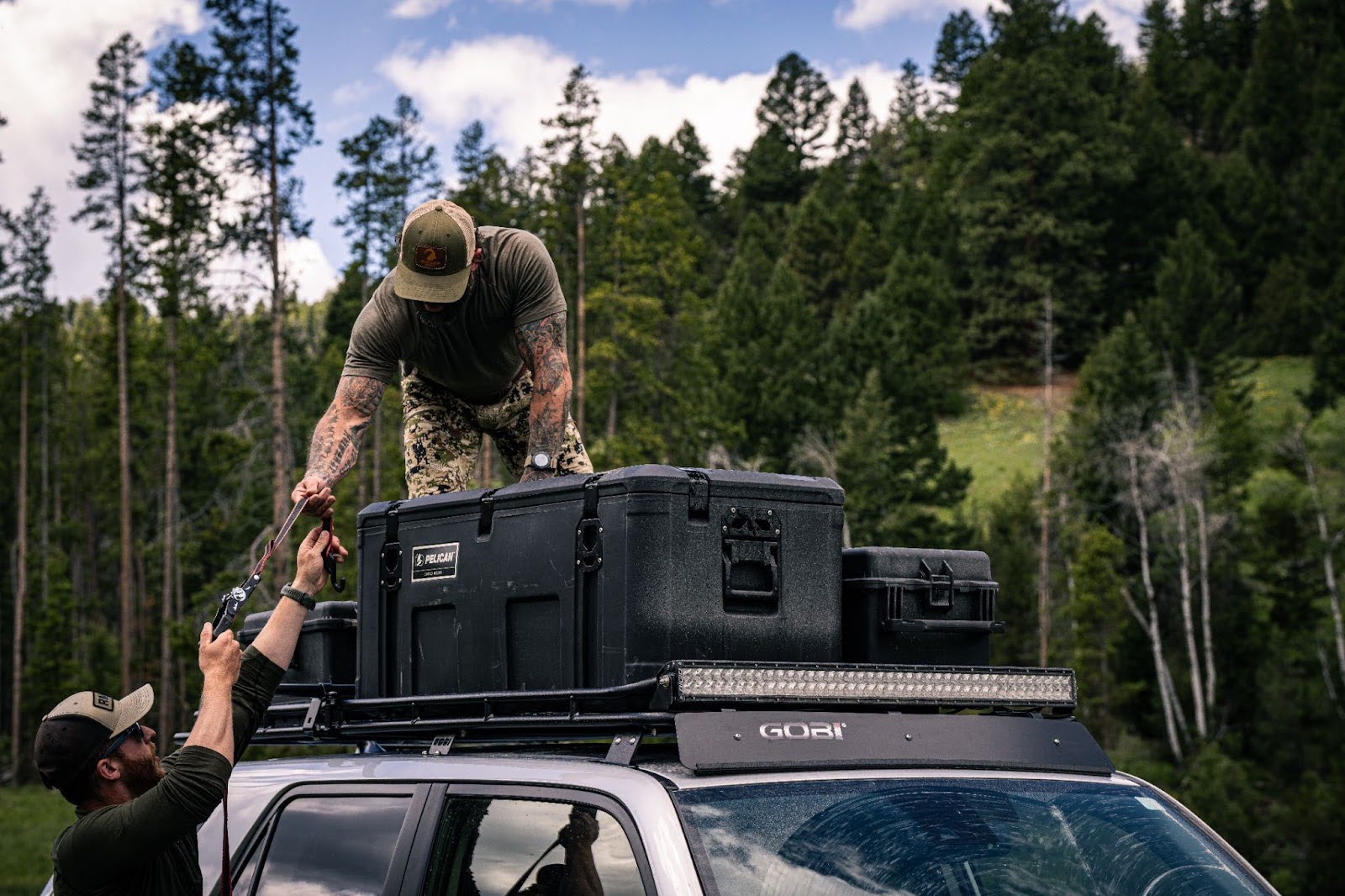
Accessorizing: Ladders, Crossbars, Lighting, and More
Ladders. A rear ladder is transformative when dealing with a tall SUV. It eliminates sketchy tire climbs and distributes weight along the hatch seam. Welded steel ladders from GOBI Racks attach without drilling, and optional gas struts compensate for added weight so the hatch still glides open.
Crossbars. Adjustable load bars ride flush with a platform, while elevation bars rise higher to allow canoe gunwales or fishing-rod tubes to sit level. Because they accept Yakima/Thule attachments, switching between ski season and mountain-bike season takes minutes.
Lighting. Night trail runs call for a mix of scene lights and long-range beams. Choosing a rack with vertical light tabs keeps wiring neat and avoids the “antler” effect of awkward external brackets. A 40-inch light-bar cut-out, offered by GOBI Racks, prevents the bar from protruding into low garages.
Wind Noise and Fuel Economy Considerations
Aerodynamics plays a larger role than many assume. While any rooftop accessory increases drag, certain design tweaks mitigate the roar. Sloped front fairings, rounded outer rails, and tightly spaced mesh all disrupt air vortices before they become audible. Independent owner tests published on forums show only a 1-2 mpg drop on the highway with a bare Stealth rack installed, versus up to 4 mpg with tall bolt-together baskets.
Adding a rooftop tent raises the frontal area significantly. In that case, a wind deflector or soft cargo “nose” makes up for the gap between the tent base and roof. Remember to factor fuel savings over the lifetime of the vehicle when comparing racks; a pricier but more aerodynamic model can pay itself off on long-distance travel.
Maintenance and Longevity
A high-quality rack demands little upkeep. After dusty desert trips, hose off the red sand that can grind away coatings. Annually, inspect welds and hardware, touching up any chipped areas with matching rust-inhibiting paint. Owners in salty winter climates sometimes apply a thin layer of Boeshield or Fluid Film inside tube openings.
Because GOBI Racks are fully welded, there are no seams to trap moisture and cause galvanic corrosion, a frequent failure point in bolt-together aluminum systems. With basic care, the rack should outlast the vehicle, and resale listings frequently note racks as a premium add-on that speeds up sales.
Budgeting: Price vs. Value
Entry-level racks can cost under $600, yet they often require extra crossbars, paint touch-ups, or mounting adapters that push the final bill closer to premium territory. Welded steel systems for the 4Runner generally fall between $1,500 and $2,000, including the choice of crossbars and an optional ladder. While that figure may seem steep, consider the combined cost of a roof tent, recovery gear, camera equipment, or sports equipment riding overhead, often $4,000 plus. Investing in a bombproof platform prevents catastrophic failures that could destroy both cargo and the truck’s roof skin.
Also, weigh the warranty and customer service. A lifetime structural warranty, like that offered by GOBI Racks, has a monetary value. Should a weld crack in year eight, a company committed to replacement or repair can save hundreds in labor and downtime.
Final Checklist Before You Buy
- Assess Actual Payload. Add up the tent weight, water jugs, traction boards, and auxiliary batteries to determine the required dynamic rating.
- Measure Home Garage. A Stealth-profile rack may clear an 83-inch door, whereas a basket with bulky gear might not.
- Choose Mounting Method. Whenever possible, favor racks that bolt to factory points. The no-drill approach of GOBI Racks maintains factory warranties and eases future removal.
- Plan for Accessories. Even if lighting or awnings aren’t immediate priorities, verify the rack’s ability to accept them later. Integrated perimeter rails simplify future upgrades.
- Set a Maintenance Routine. Monthly bolt checks and seasonal washes will keep any rack, from powder-coated steel to anodized aluminum, looking fresh.
Choosing the right 4Runner roof rack involves balancing capacity, clearance, aerodynamic efficiency, and long-term value. Models such as the handcrafted offerings from GOBI Racks illustrate how thoughtful engineering translates into real-world reliability. Whether the next journey leads to alpine trailheads or sun-baked deserts, a properly selected rack turns the 4Runner’s roofline into a launchpad for adventure.
Discover the Ultimate Roof Rack with GOBI Racks
Ready to elevate your 4Runner’s capabilities for your next adventure? Look no further than GOBI Racks, where you’ll find the perfect blend of strength, convenience, and style for your vehicle. Don’t miss the Ranger Rack, renowned for its robust 300-pound load capacity, two removable cross bars, and a no-drill mounting system for easy installation. Transform your car’s exterior and embark on your journey with confidence. Shop Now and prepare to tackle any adventure that comes your way.